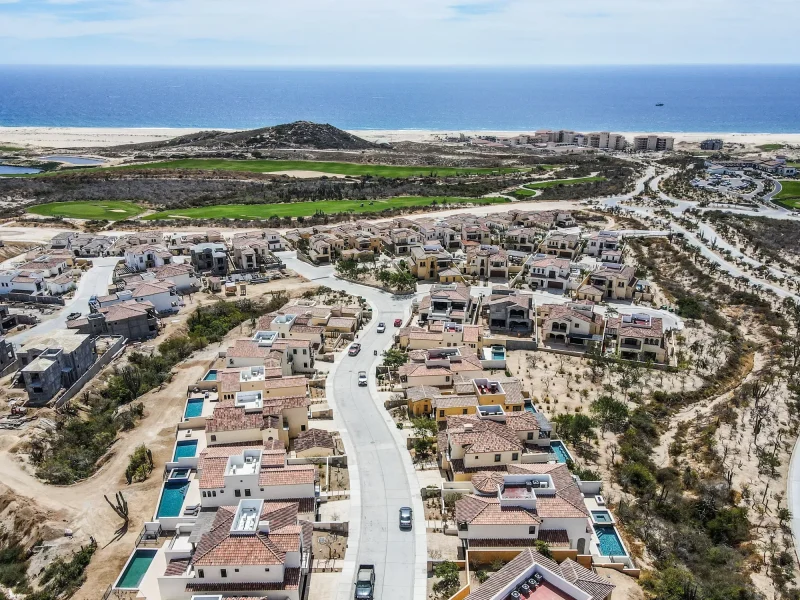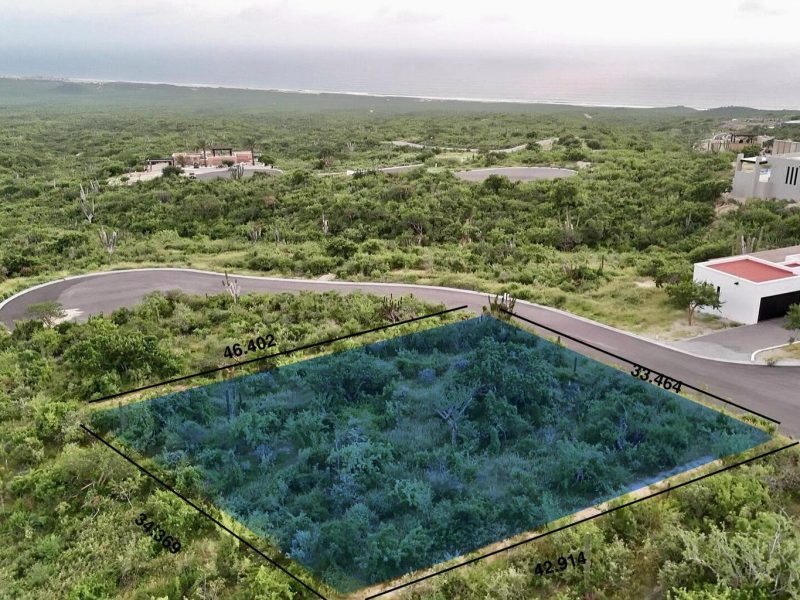
Investing in residential real estate across Los Cabos often combines personal lifestyle enjoyment with short-term vacation rental income. From ocean-view residences in Pedregal to golf villas in Quivira and along the Tourist Corridor, short-term rentals represent an active commercial segment of the regional property market.
Operating a vacation rental in Baja California Sur requires strict compliance with private condominium bylaws, municipal regulations, and Mexican tax codes. A foreign owner renting a residential villa or condominium must satisfy federal tax withholdings, state lodging levies, and gated community security rules.
Our team details the statutory tax obligations, community covenants, and due diligence checks necessary to operate a lawful vacation rental in Los Cabos.
Community Bylaws First: Why Every Gated Community Has Different Rules
Before evaluating gross rental yields, buyers must verify whether vacation rentals are legally permitted within the specific development. In Mexico, private residential regimes (regímenes de propiedad en condominio) possess broad legal authority to regulate or prohibit commercial leasing.
Communities Designed for Vacation Rentals
Certain master-planned developments were engineered from inception to accommodate resort guests and rental operations:
- Quivira Los Cabos: In master developments like Quivira, condominium neighborhoods such as Copala and Mavila were structured around vacation lodging. They provide professional on-site property management, concierge check-in desks, and organized rental programs.
- Cabo del Sol: Along the Corridor, Cabo del Sol balances private residential enclaves with resort residences that permit short-term leasing, allowing owners to capture seasonal golf travel demand.
However, even in rental-friendly developments, rules remain regime-specific. As documented in our community guide for Quivira:
"RENTAL AND PET POLICY ARE NOT PUBLISHED. Rentals are widespread and clearly permitted in practice; no written rental policy, minimum stay or pet restriction is published. Obtain the CC&Rs and regulations for the specific condominium regime before you rely on rental income or bring animals."
Single-family luxury enclaves within the same master development, such as Coronado, enforce stricter architectural and occupancy standards to preserve residential privacy.
Enclaves with Rental Surcharges and Gate Protocols
In established residential communities, rental policies often evolve into specialized surcharge structures:
- Pedregal de Cabo San Lucas: In Pedregal, short-term rentals are widespread and represent one of the most established vacation rental markets in Cabo San Lucas. However, governance is decentralized across individual hillside enclaves.
As recorded in our community guide:
"ALSO BUDGET FOR: Annual bank trust (fideicomiso) fee, Acquisition tax and closing costs, A rental surcharge in some enclaves, Property management if the home sits unoccupied."
Our guide further highlights the importance of individual regime bylaws:
"RENTAL POLICY IS NOT PUBLISHED. Pedregal is one of Cabo’s strongest short-term rental markets and rentals are clearly permitted in practice, but no master rule is published. At least one enclave levies a rental surcharge. Get the CC&Rs if rental income is part of your case."
In Puerto Los Cabos, residential leasing reflects a mixed model. In neighborhoods like El Altillo, our community guide notes:
"Rentals plainly happen: short-term, long-term institutional leases, and a Ritz-Carlton Reserve rental programme all appear in the record: but no community rule, minimum stay or cap is documented anywhere."
Similarly, in Club Campestre, including neighborhoods like Larena and Wen Living, our community guide notes:
"RENTAL POLICY IS NOT PUBLISHED. Homes here are plainly used as vacation rentals, but no rental rules, minimum stays or fee schedules are published anywhere. Get the CC&Rs if rental income is part of your purchase plan."
Exclusive Master Communities that Prohibit or Restrict Short-Term Rentals
At the top tier of the luxury market, several private residential communities strictly prohibit or heavily restrict short-term rentals to maintain security and serenity:
- Querencia: In Querencia, residential covenants and neighborhood civil associations (Secciones A.C.) prioritize member tranquility. Private amenities, including the Tom Fazio golf course and private beach club, do not extend access to unaccompanied vacation renters. Short-term commercial leasing is strictly controlled.
- Palmilla: In luxury enclaves such as Villas de Oro, residential sub-regimes enforce strict minimum lease durations, often requiring leases of six months or longer, effectively precluding weekly tourist turnover.
Purchasing a property with the intent to operate an Airbnb without reviewing the recorded condominium deed (escritura constitutiva) can result in immediate HOA disputes and operational injunctions.
Mexican Federal Tax Obligations: The SAT Digital Platforms Regime
Earning rental income from Mexican real estate triggers mandatory federal tax compliance overseen by the Mexican tax service (Servicio de Administración Tributaria / SAT). This applies equally to Mexican citizens and foreign property owners holding real estate through a bank trust (fideicomiso).
Mandatory Mexican Tax Identification (RFC) for Fideicomiso Owners
Under Mexican fiscal law, any individual or entity generating revenue from Mexican real property must possess an active Federal Taxpayer Registry number (Registro Federal de Contribuyentes / RFC).
Foreign owners must register under the digital platforms tax regime (Régimen de las Actividades Empresariales con ingresos a través de Plataformas Tecnológicas). Registration requires obtaining an official tax ID through the SAT, supported by the property’s fideicomiso trust deed and a valid Mexican resident card or legal tax power of attorney (poder notarial).
Federal Income Tax (ISR) Withholding Rules: 4% with RFC vs. 20% Default Rate
Under Article 113-A of the Mexican Income Tax Law (Ley del Impuesto sobre la Renta / LISR), intermediary digital booking platforms (such as Airbnb and VRBO) are legally mandated to act as tax withholding agents. The withholding rate depends directly on whether the owner provides a registered RFC:
- Compliant RFC on File: When a valid RFC is registered with the platform, the platform withholds a statutory flat rate of 4.0% for lodging services directly from gross monthly booking revenues.
- No RFC on File: If an owner fails to register an RFC, the digital platform is legally obligated to apply a punitive default withholding of 20.0% income tax against gross revenues.
Value Added Tax (IVA) Breakdown: 16% Total, 8% Digital Platform Withholding
In addition to income tax, vacation rentals are commercial lodging services subject to the federal 16.0% Value Added Tax (Impuesto al Valor Agregado / IVA) under Chapter III-BIS of the VAT Law:
- Compliant RFC on File: The digital platform withholds 50% of the applicable 16.0% VAT, resulting in an effective withholding of 8.0%. The remaining 8.0% is disbursed to the property owner, who files monthly VAT returns, credits deductible IVA expenses, and remits the balance to the SAT.
- No RFC on File: Without an RFC, the booking platform withholds 100% of the 16.0% VAT and remits the full amount directly to the SAT.
Under default non-RFC withholdings, digital platforms deduct 20% ISR plus 16% IVA directly from gross booking revenues before funds are disbursed.
Baja California Sur State Lodging Tax (Impuesto Sobre Hospedaje / ISH)
Beyond federal taxes, Baja California Sur levies an official state lodging tax on all temporary residential accommodations.
The 4% Statutory Rate: Three Percentage Points for Tourism Promotion and One Point for Infrastructure
The State Lodging Tax (Impuesto Sobre la Prestación de Servicios de Hospedaje / ISH) is codified in the Ley de Hacienda del Estado de Baja California Sur. Under Article 13 and Article 14, the tax applies to temporary accommodation provided in private homes, condominiums, and villas:
"Artículo 13.- Es objeto de este Impuesto, la prestación de servicios de hospedaje en hoteles, moteles, casas de huéspedes, campamentos, paradero de casas rodantes, marinas turísticas, establecimientos de tiempo compartido o cualquier otra instalación utilizada de manera ocasional o permanente para ese fin en el Estado de Baja California Sur."
Article 16 sets the total tax rate at 4%:
"Artículo 16.- El impuesto se calculará aplicando la tasa del 4% a la base gravable establecida en el artículo anterior."
Article 16 also establishes the statutory distribution of collected funds:
- Three Percentage Points: Transferred to state and municipal tourism promotion trusts, with 80 percent of collections in each municipality distributed to local destination promotion.
- One Percentage Point: Transferred directly to the Social Infrastructure Works Trust (Fideicomiso para Obras de Infraestructura Social / FOIS) to fund local civic infrastructure.
Under Article 17, the lodging tax is passed through directly to the guest:
"Artículo 17.- El contribuyente trasladará el impuesto en forma expresa y por separado a las personas que reciban los servicios gravados en este Capítulo."
How Digital Platforms Remit or Shift Withholding to Homeowners
Major digital platforms maintain collection and remittance agreements with the Baja California Sur state government. In many instances, the platform automatically collects the 4% ISH directly from the traveler at booking and remits it to the state treasury (Secretaría de Finanzas y Administración).
However, owners who accept direct bookings, private concierge reservations, or corporate executive leases remain personally responsible for collecting the 4% ISH, filing state declarations, and remitting payment to the state tax authorities.
Gated Community Security and Operational Guest Protocols
Operating a vacation rental in a private gated community requires coordination with community security personnel. Master associations enforce strict protocols to preserve safety and neighborhood decorum.
Advance Guard Gate Registration, Identification Vetting, and Guest Parking Rules
Gated communities maintain controlled access gates. Standard operating rules require:
- Advance Guest Manifests: Property managers must submit the names of arriving guests, confirmation numbers, and rental dates to the security office prior to arrival.
- Identification Verification: Security personnel verify government photo IDs or passports at the guard gate. Unregistered visitors are denied vehicular entry.
- Designated Vehicle Parking: Guests must park in designated driveways or assigned condominium stalls. Parking on community streets or blocking hydrants triggers immediate towing.
Quiet Hours and Community Covenants
To balance commercial rental activity with full-time resident comfort, homeowners associations enforce operational rules:
- Mandatory Quiet Hours: Noise restrictions apply during evening and overnight hours. Amplified outdoor music and loud pool gatherings during these periods are strictly prohibited.
- Maximum Occupancy Caps: HOA bylaws specify maximum overnight occupancy based on bedroom count. Exceeding occupancy limits violates community regulations.
- Amenity Access Restrictions: In many private golf and beach developments, vacation guests cannot access members-only clubhouses, golf courses, or private beach pavilions.
Summary of Vacation Rental Tax Rates in Baja California Sur
The following table summarizes the mandatory taxes applicable to vacation rentals in Los Cabos:
| Tax Obligation | Statutory Rate | Rate with Valid RFC | Default Rate (No RFC) | Collecting Authority |
|---|---|---|---|---|
| BCS State Lodging Tax (ISH) | 4.0% | 4.0% collected and remitted | 4.0% collected and remitted | BCS Secretaría de Finanzas |
| Federal Income Tax (ISR) | Sliding / Flat | 4.0% flat platform withholding | 20.0% default withholding | SAT (Federal Treasury) |
| Federal Value Added Tax (IVA) | 16.0% | 8.0% platform withholding (50%) | 16.0% platform withholding (100%) | SAT (Federal Treasury) |
Investor Checklist: Key Due Diligence Steps Before Buying an Income Property
To avoid regulatory penalties or association disputes, follow this five-step verification sequence:
- Review Recorded CC&Rs (Régimen de Condominio): Request the official condominium bylaws from the seller and verify the exact clauses governing short-term leases, minimum stays, and rental administrative fees.
- Confirm HOA Surcharges: Inquire whether the sub-community levies an annual or monthly rental surcharge on investment homes.
- Engage a Certified Mexican Accountant (Contador Público): Establish your Mexican tax profile, apply for your RFC, and configure digital platform tax dashboards to ensure the compliant 4% ISR and 8% IVA withholding tiers.
- Inspect Enclave Security Procedures: Review the security gate protocol for guest registration, keycard issuances, and vendor access.
- Verify Comprehensive Property Insurance: Secure a commercial vacation rental property insurance policy that provides liability coverage for international guests, as outlined in our insurance preparation guide.
For specific tax structuring, accounting services, and legal review of condominium bylaws, consult a certified Mexican accountant (contador público) and a qualified Mexican real estate attorney before finalizing an acquisition.
Advisory Standard
Our multidisciplinary team provides objective market analysis, fiduciary guidance, and private transaction advisory across Los Cabos and Baja California Sur.