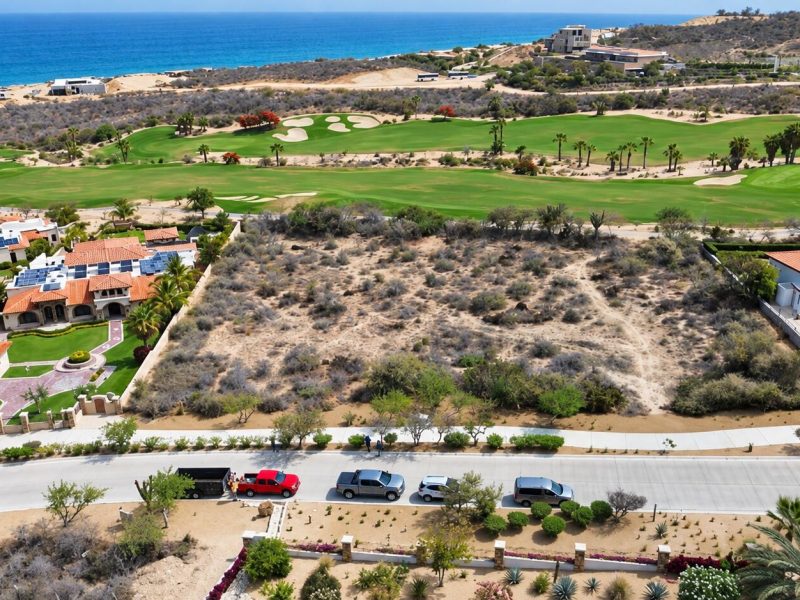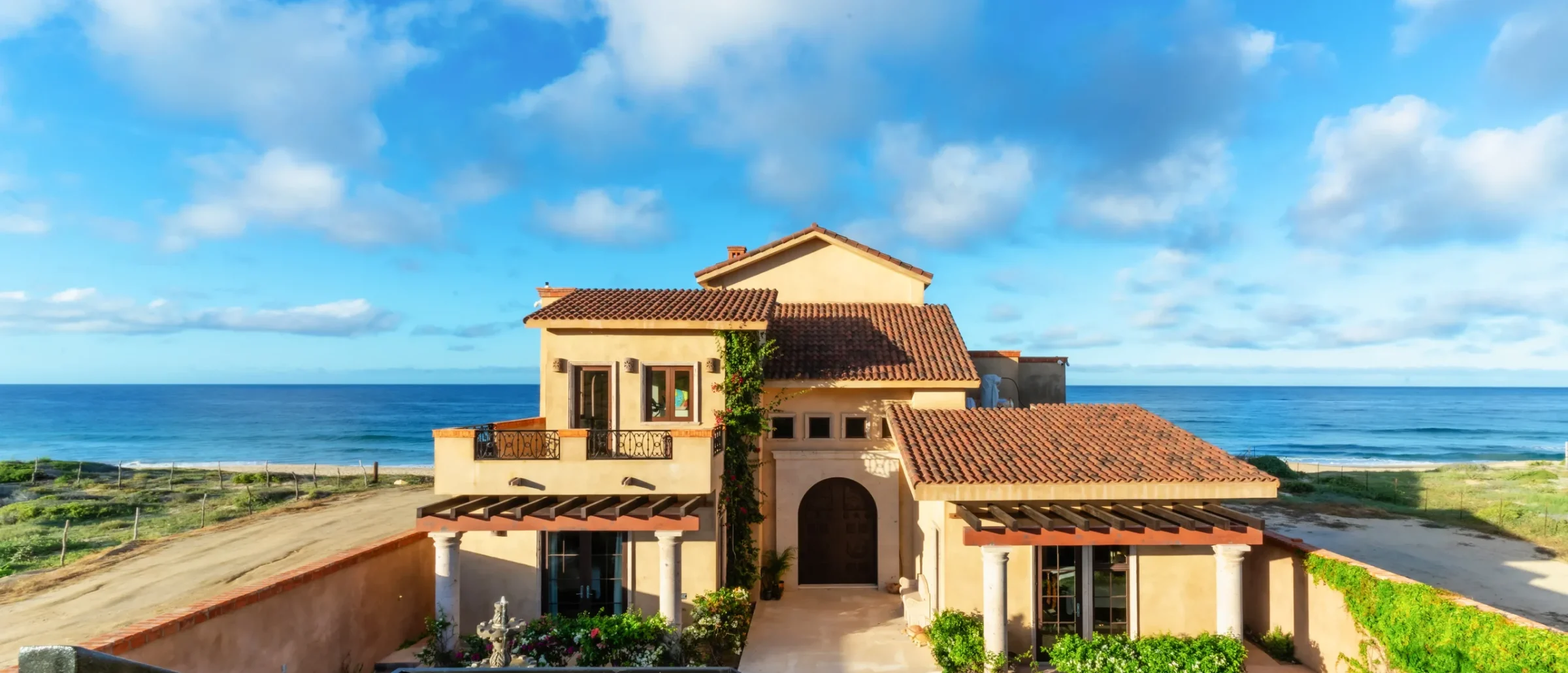
Owning residential property in Baja California Sur offers exceptional lifestyle and investment value, but coastal homeownership also requires clear operational planning for severe weather. Understanding the seasonal weather patterns of the eastern Pacific, maintaining reliable physical window protection, and reviewing property insurance policies are essential responsibilities for every homeowner in the region. Whether managing a primary residence, a seasonal vacation villa, or an investment holding, proactive storm preparation safeguards your home and ensures rapid recovery when tropical weather systems approach the southern tip of the peninsula.
For investors and buyers exploring the market through our comprehensive Los Cabos community guides or evaluating options for buying real estate in Los Cabos, understanding local risk management and property maintenance protocols is just as critical as analyzing neighborhood amenities. In this guide, the CaboForSale team provides a verified overview of regional hurricane dynamics, official emergency guidance, municipal risk planning frameworks, shutter protection options, insurance review standards, and absentee homeowner management protocols.
The Realities of Eastern Pacific Hurricane Season in Baja Sur
Understanding regional storm risks begins with tracking the official meteorological calendar. According to the NOAA National Hurricane Center, the official Eastern Pacific hurricane season runs from May 15 to November 30. Historical weather records compiled by the NOAA National Hurricane Center indicate that a peak in activity is noted in late August, with most tropical cyclones occurring between late June and early October across the eastern Pacific basin.
Tropical weather systems are categorized based on their maximum sustained wind speeds. As defined by the NOAA National Hurricane Center, a hurricane is a tropical cyclone with maximum sustained winds of at least 74 mph (64 knots). A major hurricane is classified as a tropical cyclone with maximum sustained winds of at least 111 mph (96 knots), which corresponds to Category 3, 4, or 5 on the Saffir-Simpson Hurricane Wind Scale according to NOAA Climatology standards.
Historical events demonstrate the importance of comprehensive preparation across the southern Baja peninsula. On 15 September 2014, Hurricane Odile made landfall just to the east of Cabo San Lucas with 110 kt winds as a Category 3 hurricane, as documented in the official NOAA National Hurricane Center Tropical Cyclone Report for Hurricane Odile. The storm produced severe impacts across regional infrastructure in Baja California Sur. According to the NOAA Hurricane Odile Report, Odile devastated electrical infrastructure, taking out about 550 high-tension transmission towers and 3,400 distribution posts, leaving over 239,000 people (over 90% of the population) without electricity in Baja California Sur.
In addition to severe wind forces, tropical cyclones can deliver intense precipitation to the region. The NOAA Hurricane Odile Report recorded a maximum rainfall total of about 8.67 inches (220 mm) in Santiago. Across northern municipalities including Loreto, Comondú, and Mulegé, strong winds combined with heavy rains washed away roads and destroyed bridges, creating substantial transportation and relief challenges as detailed by NOAA. Understanding these meteorological forces reinforces why structured preparation and durable property protection remain vital for Los Cabos homeowners.
Local Risk Planning and Construction Frameworks
Navigating environmental risks in Baja California Sur involves understanding both local municipal planning instruments and Mexican federal civil protection frameworks. In the municipality of Los Cabos, technical planning is led by the Instituto Municipal de Planeación de Los Cabos (IMPLAN Los Cabos), a decentralized public municipal planning body with its own legal status and assets that serves as the official technical advisory entity for the local government.
Property owners and buyers researching residential surroundings can review municipal instruments published by IMPLAN Los Cabos, including the Segunda Actualización del Plan Parcial de Desarrollo Urbano para los Centros de Población San José del Cabo to Cabo San Lucas (PDU 2040). This normative urban planning instrument establishes strategic, integral, and sustainable long-term land-use policies across San José del Cabo and Cabo San Lucas. Reviewing official planning instruments helps property owners understand urban zoning and infrastructure developments across different sectors of the region.
At the national level, disaster mitigation and emergency responses are governed by Mexico’s Ley General de Protección Civil. The law establishes mandatory coordination mechanisms across federal, state, and municipal authorities. Under the Ley General de Protección Civil, official emergency shelters (albergues) are defined as installations established to provide shelter and protection to individuals whose homes have been impacted by disruptive phenomena.
Furthermore, the Ley General de Protección Civil establishes the National Risk Atlas (Atlas Nacional de Riesgos). The law defines the Atlas as an integral information system that analyzes spatial and temporal data regarding disruptive agents, expected damage, hazards, vulnerabilities, and the degree of exposure of affected systems. When evaluating residential communities such as Cabo San Lucas or neighboring coastal developments, homeowners and prospective purchasers should consult official municipal planning and civil protection authorities for specific local hazard maps and environmental documentation.
Storm Shutter Systems and Physical Property Hardening
Protecting residential structures from windborne debris and water intrusion is the most direct physical risk-reduction measure a homeowner can implement. According to the NOAA National Weather Service, it is vital for property owners to understand their home’s vulnerability to storm surge, flooding, and wind well before hurricane season begins.
Window protection represents a critical defense during high-wind events. The NOAA National Weather Service specifically advises covering all home windows, stating that permanent storm shutters offer the best protection for residential windows. For properties without permanent shutters, the National Weather Service identifies boarding up windows with 5/8 inch exterior grade or marine plywood, built to fit and ready to install, as a reliable secondary option. Emergency management authorities strongly urge homeowners to purchase necessary supplies before hurricane season rather than waiting for a pre-storm rush, as documented by the National Weather Service.
Outdoor spaces and perimeter drainage also require systematic pre-storm attention. Federal emergency guidance published by Ready.gov emphasizes strengthening your home by de-cluttering drains and gutters, bringing in outside furniture, and considering hurricane shutters. Ensuring that roof downspouts and patio drainage channels remain clear prevents localized pooling when heavy rainfall occurs.
The table below summarizes essential physical storm hardening recommendations established by official emergency management agencies:
| Protection Measure | Official Recommendation | Source Reference |
|---|---|---|
| Window Covering Systems | Cover all home windows; permanent storm shutters offer the best protection | National Weather Service |
| Plywood Window Protection | Board up windows with 5/8 inch exterior grade or marine plywood, built to fit | National Weather Service |
| Outdoor Patio Furniture | Bring inside all outside furniture to eliminate windborne hazards | Ready.gov |
| Drainage and Gutter Maintenance | De-clutter drains, channels, and gutters to handle heavy precipitation | Ready.gov |
| Emergency Equipment Verification | Check emergency equipment including flashlights, generators, and shutters | National Weather Service |
Property Insurance in Los Cabos: Windstorm, Flood, and Policy Coverage
While physical barriers safeguard glass and exterior openings, comprehensive property insurance provides vital financial protection against catastrophic loss. The NOAA National Weather Service advises property owners to review insurance policies prior to storm season to ensure adequate coverage for both the home and personal property.
Basic emergency preparedness guidelines from Ready.gov highlight the necessity of reviewing important documents, keeping insurance paperwork easily accessible, and maintaining up-to-date policy records. In Mexico, property insurance policies for coastal residential assets must be evaluated carefully to confirm specific coverage parameters. The CaboForSale team recommends consulting directly with a licensed Mexican insurance broker and local legal counsel to verify policy inclusions, deductible structures, and filing requirements.
In the event that a property experiences storm-related damage, immediate and structured documentation is essential. According to Ready.gov, homeowners must document any property damage with photographs and contact their insurance company for assistance as soon as conditions are safe. Maintaining clear pre-storm and post-storm photographic records ensures that claim submissions proceed smoothly with insurance adjusters.
The Absentee Homeowner Storm Protocol: Property Management Integration
A substantial proportion of luxury homeowners in Los Cabos reside outside Mexico for part of the year. For absentee owners, establishing a coordinated storm management protocol with trusted local property managers or caretakers is essential to protect residential investments during storm season. As outlined by Ready.gov, household preparedness requires making an emergency plan, knowing your evacuation zone, reviewing important documents, and gathering supplies.
Monitoring official weather advisories is critical during active tropical developments. The NOAA National Weather Service notes that whenever a tropical cyclone has formed in the eastern North Pacific or Atlantic, the National Hurricane Center issues tropical cyclone advisory products at least every 6 hours (at 5 am, 11 am, 5 pm, and 11 pm EDT). When coastal tropical storm or hurricane watches or warnings are in effect, the National Hurricane Center issues public advisories every 3 hours as documented by the National Weather Service.
Life safety always supersedes property preservation. If local civil protection officials declare a mandatory evacuation, residents and staff must follow instructions issued by local officials and leave immediately, as mandated by the National Weather Service and Ready.gov. Additionally, emergency guidelines from Ready.gov stress that individuals must not walk, swim, or drive through flood waters under any circumstances.
For occupants sheltering in place when evacuation is not ordered, the National Weather Service advises taking refuge in a small interior room, closet, or hallway on the lowest level away from windows during the storm. Once the storm passes and local authorities confirm safety, property managers should inspect the premises, document any physical damage with detailed photographs, and contact the insurance carrier according to Ready.gov.
For investors seeking well-built residential real estate in Baja California Sur, reviewing community infrastructure, elevation, and construction quality is an essential part of due diligence. You can explore available villas and estates by browsing Los Cabos luxury properties or contacting our team for local insights.
Frequently Asked Questions (FAQ)
When is the official Eastern Pacific hurricane season?
The official Eastern Pacific hurricane season runs from May 15 through November 30 each year, with peak activity noted in late August and most tropical cyclones occurring between late June and early October.
What storm protection is recommended for residential windows?
Official emergency guidance recommends covering all windows, noting that permanent storm shutters offer the best protection, with 5/8 inch exterior grade or marine plywood serving as a secondary option.
How often do meteorological agencies issue tropical cyclone advisories?
The National Hurricane Center issues tropical cyclone advisories at least every 6 hours (at 5 am, 11 am, 5 pm, and 11 pm EDT), and increases frequency to every 3 hours when coastal watches or warnings are active.
What actions should property owners take before and after a severe storm?
Before a storm threatens, owners should review insurance policies, check emergency equipment such as generators and storm shutters, clear gutters, and bring in outdoor furniture. After a storm, owners should document property damage with photographs and contact their insurer for assistance.
Where can homeowners access official municipal planning and risk information in Los Cabos?
Property owners can consult IMPLAN Los Cabos, the municipal technical advisory body that publishes urban development instruments including the PDU 2040, as well as the National Risk Atlas established under Mexico’s General Civil Protection Law.
Summary and Team Guidance
Proactive planning, certified window protection, thorough insurance reviews, and trusted local property management allow Los Cabos homeowners to protect their coastal real estate with confidence. The CaboForSale team is dedicated to providing buyers and owners with objective market information, local guidance, and property resources across Baja California Sur.
Disclaimer: This guide is published by the CaboForSale team for general informational purposes. It does not constitute formal legal, structural engineering, or insurance underwriting advice. Property owners should consult licensed Mexican insurance brokers, certified architects or engineers, and municipal authorities to confirm specific requirements for their properties.
Advisory Standard
Our multidisciplinary team provides objective market analysis, fiduciary guidance, and private transaction advisory across Los Cabos and Baja California Sur.